LIGHT / EVIDENCE
This light was really here.
Photography’s oldest agreement was made with light. Something was there. Light reflected from it, passed through the lens and touched a surface.
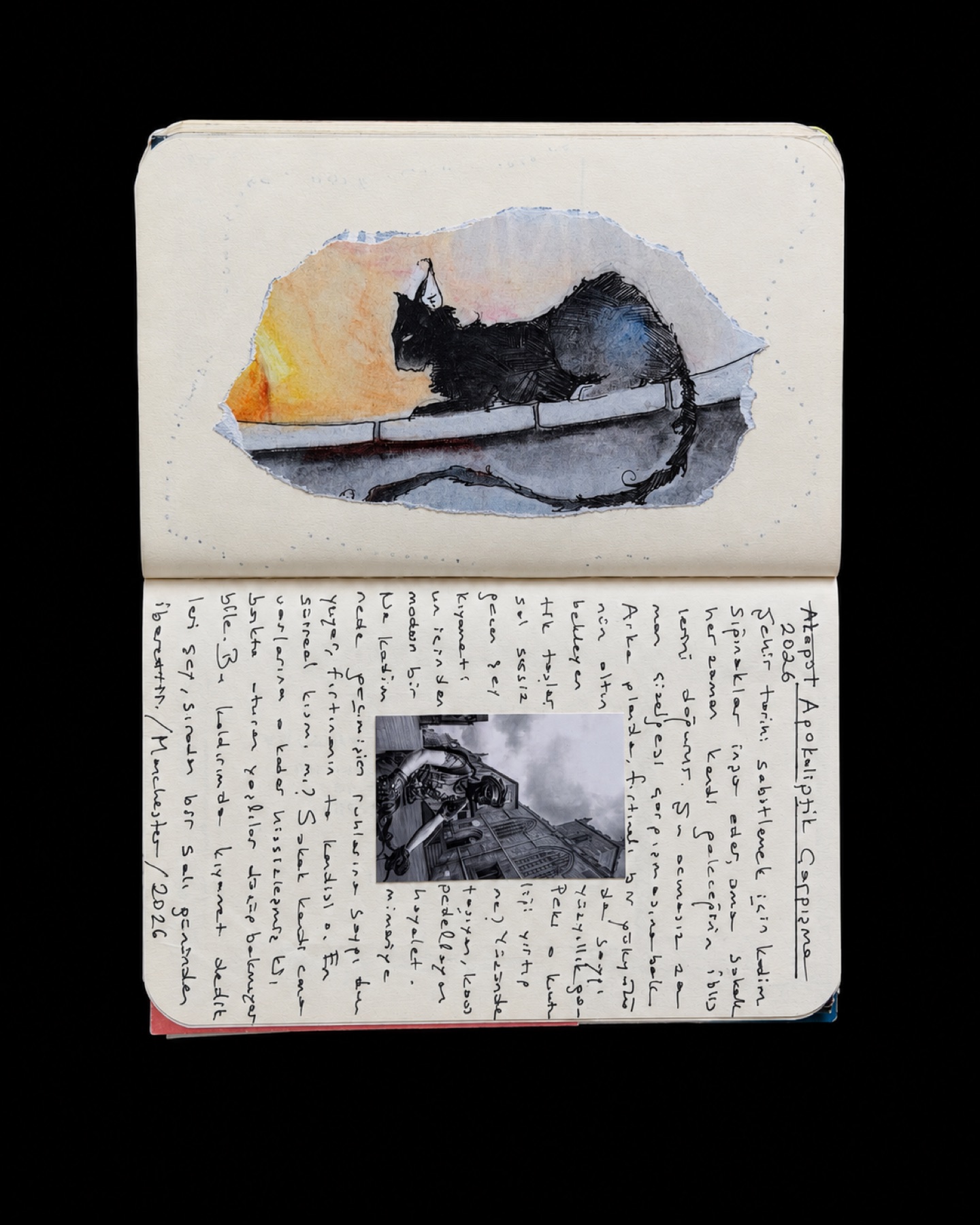
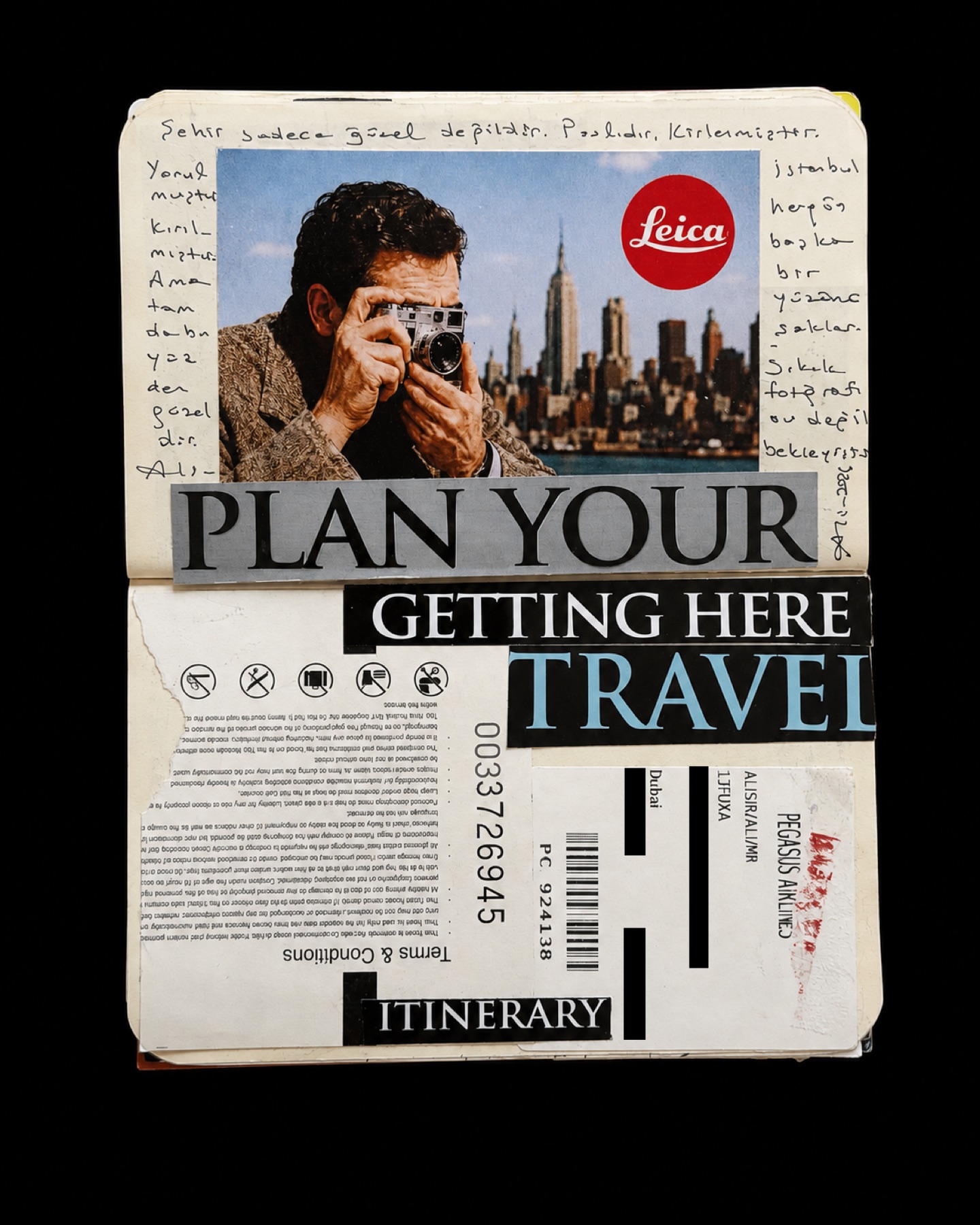
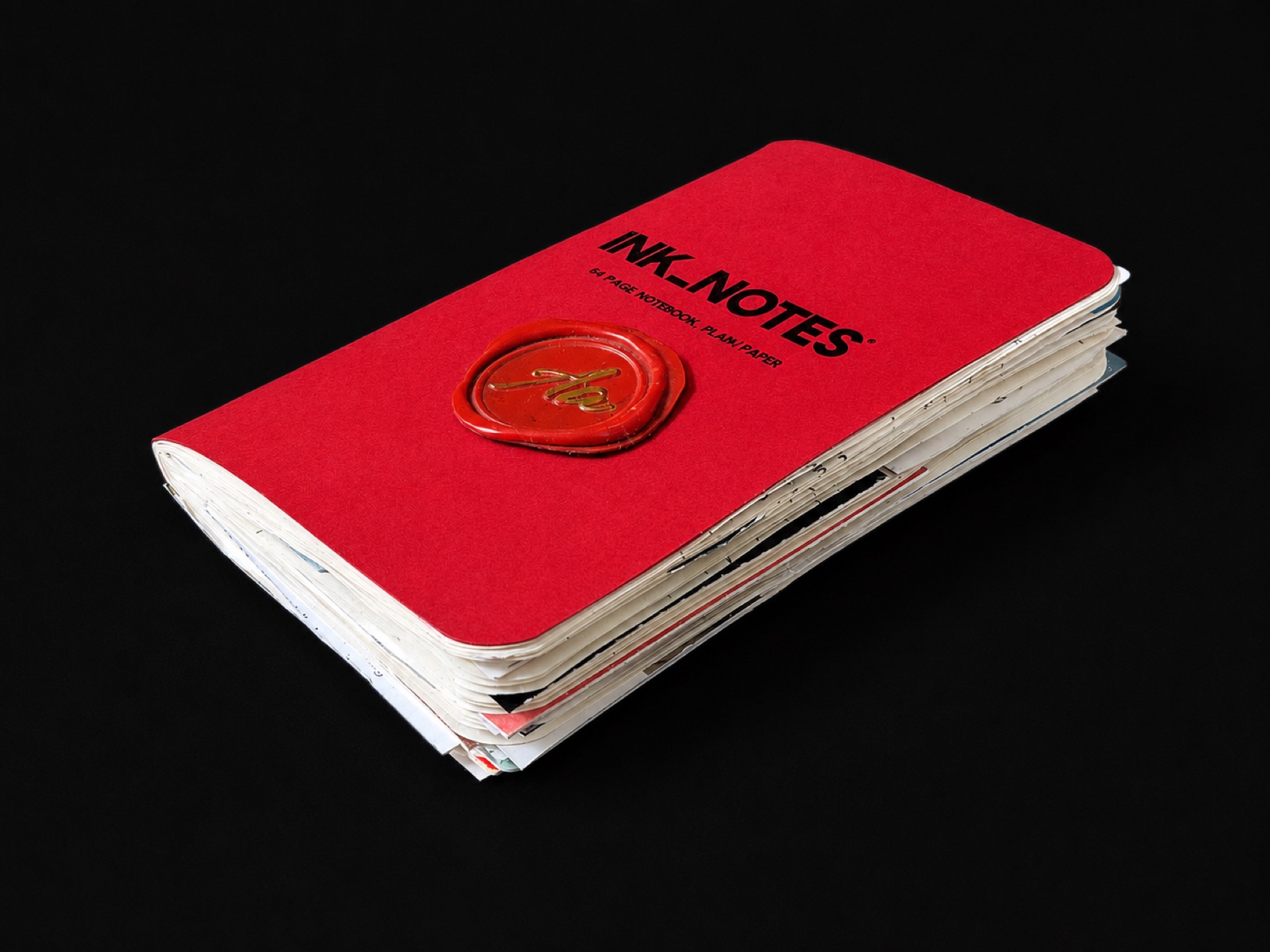
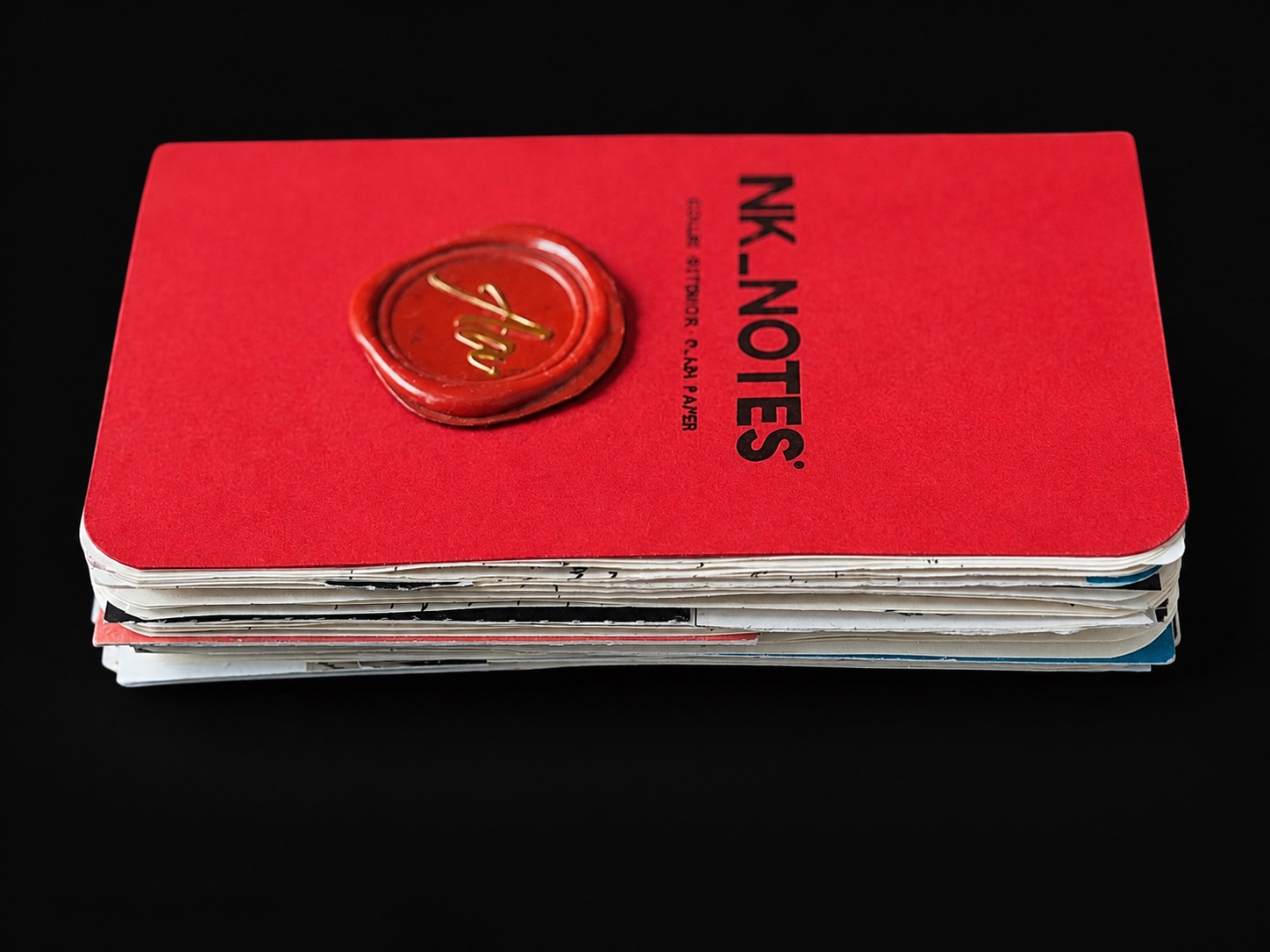
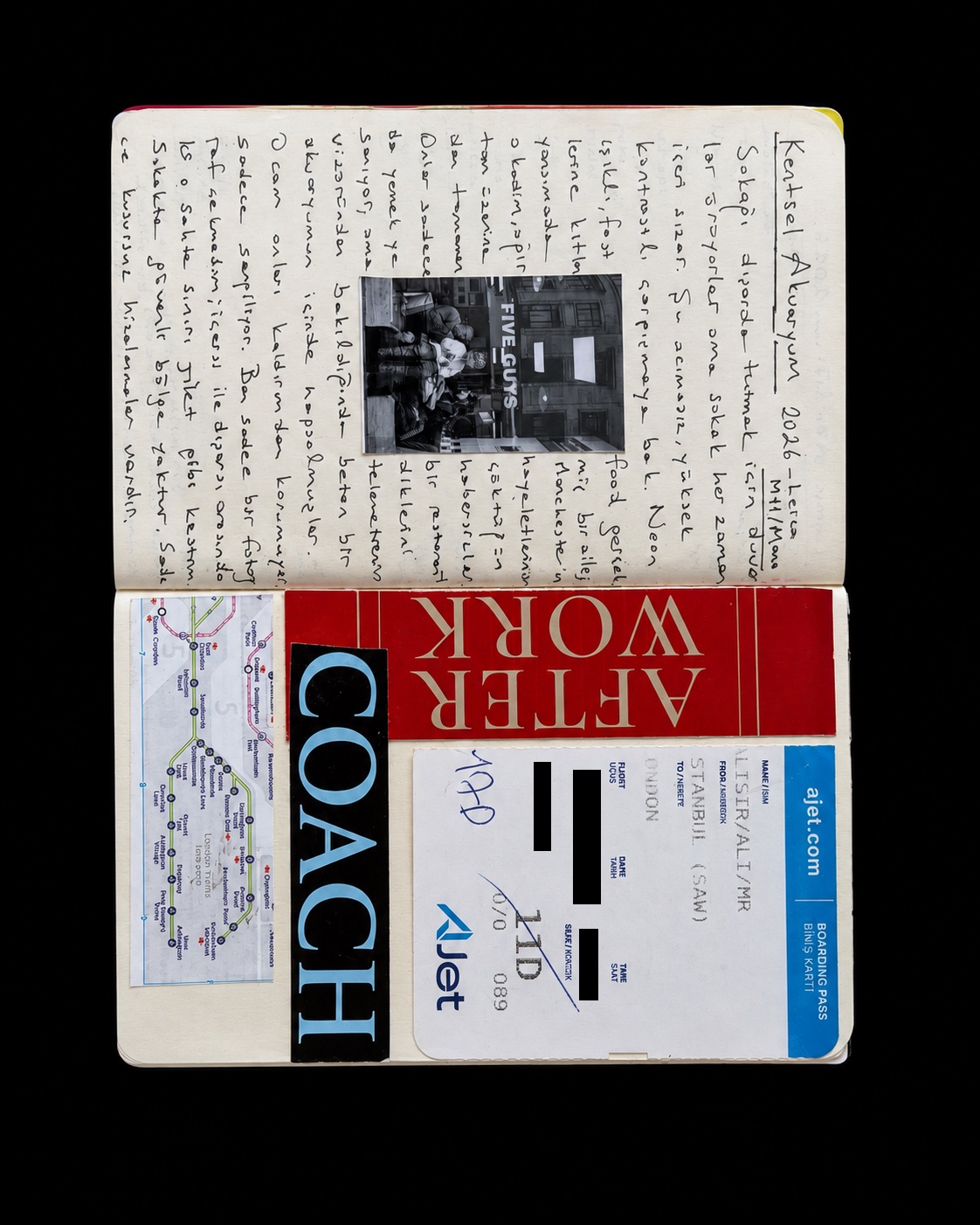
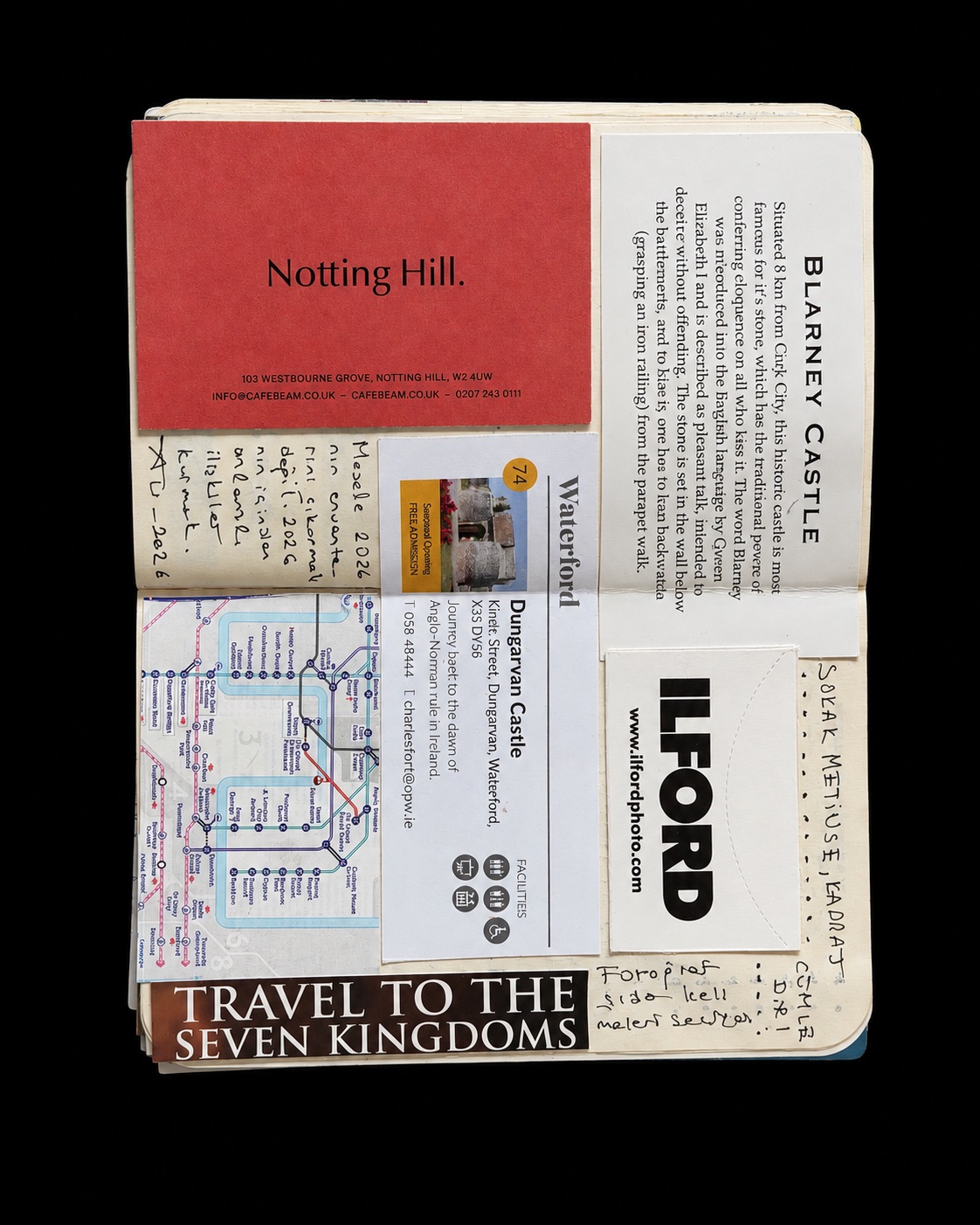
These colour notebook pages sit beside the photographic archive as a working surface: handwritten fragments, pasted images, quick observations and private diagrams made before or after walking through the city.
The notes are not captions. They are traces of attention: a second register where the photograph begins to think with drawings, words, cuts and colour.
This light was really here.
Photography’s oldest agreement was made with light. Something was there. Light reflected from it, passed through the lens and touched a surface.
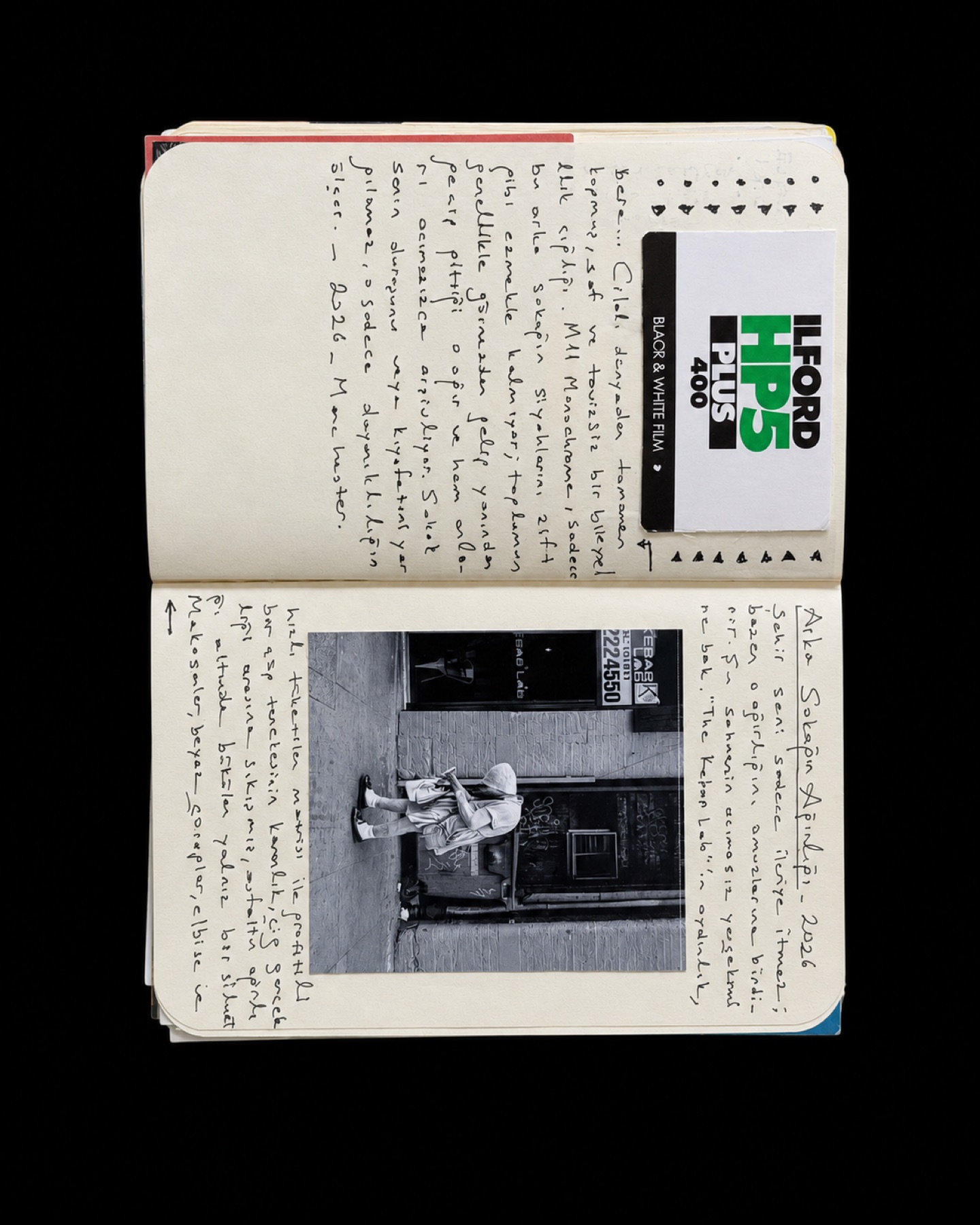
The photograph keeps what I saw.
The photograph keeps what I saw. The notebook keeps what I was thinking. Years later, I do not know which one will tell more.
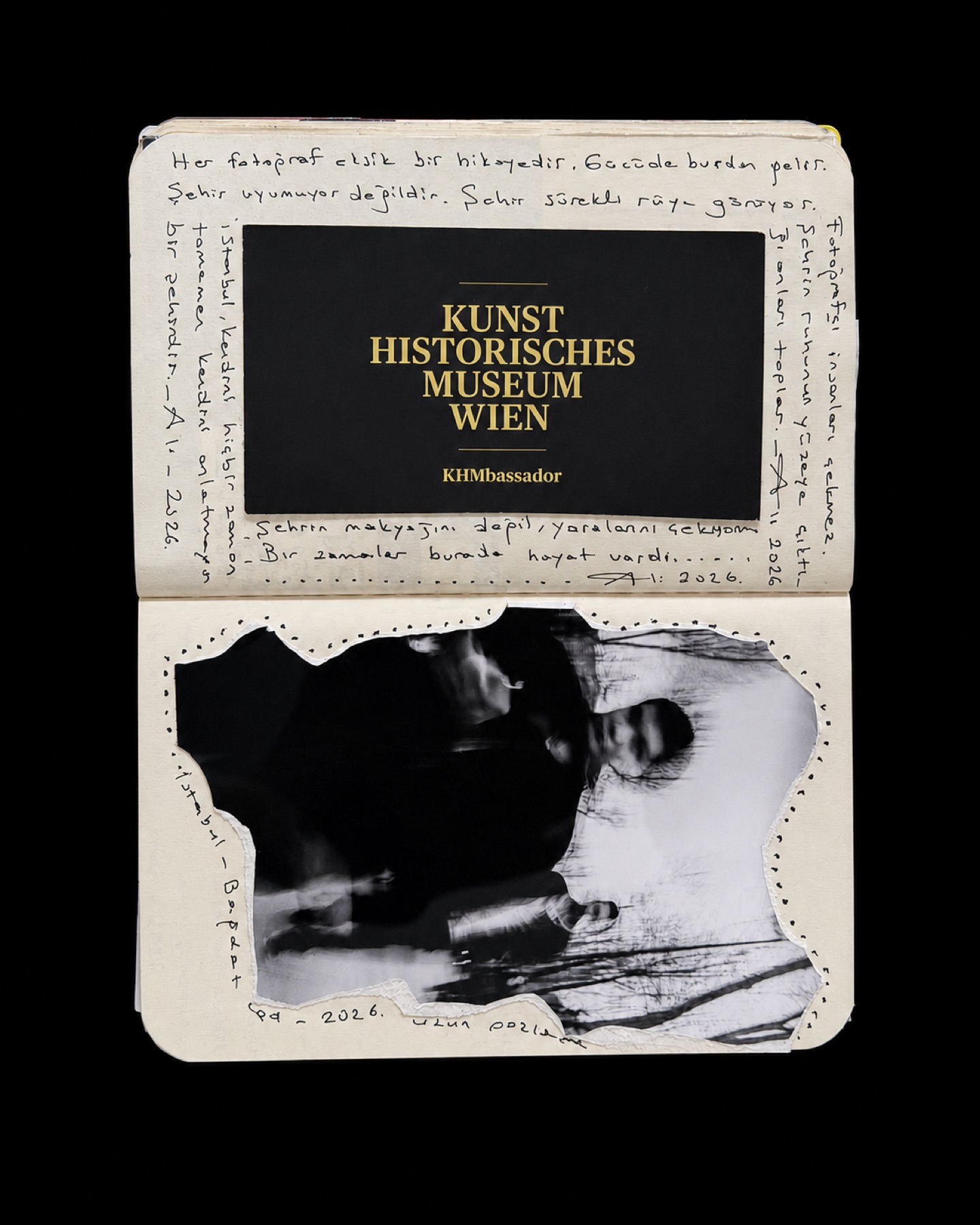
Error can be the fingerprint of the event.
A tilted frame, missed focus, grain, a leak of light: none of these make a photograph good by themselves. But real life never aligns perfectly.
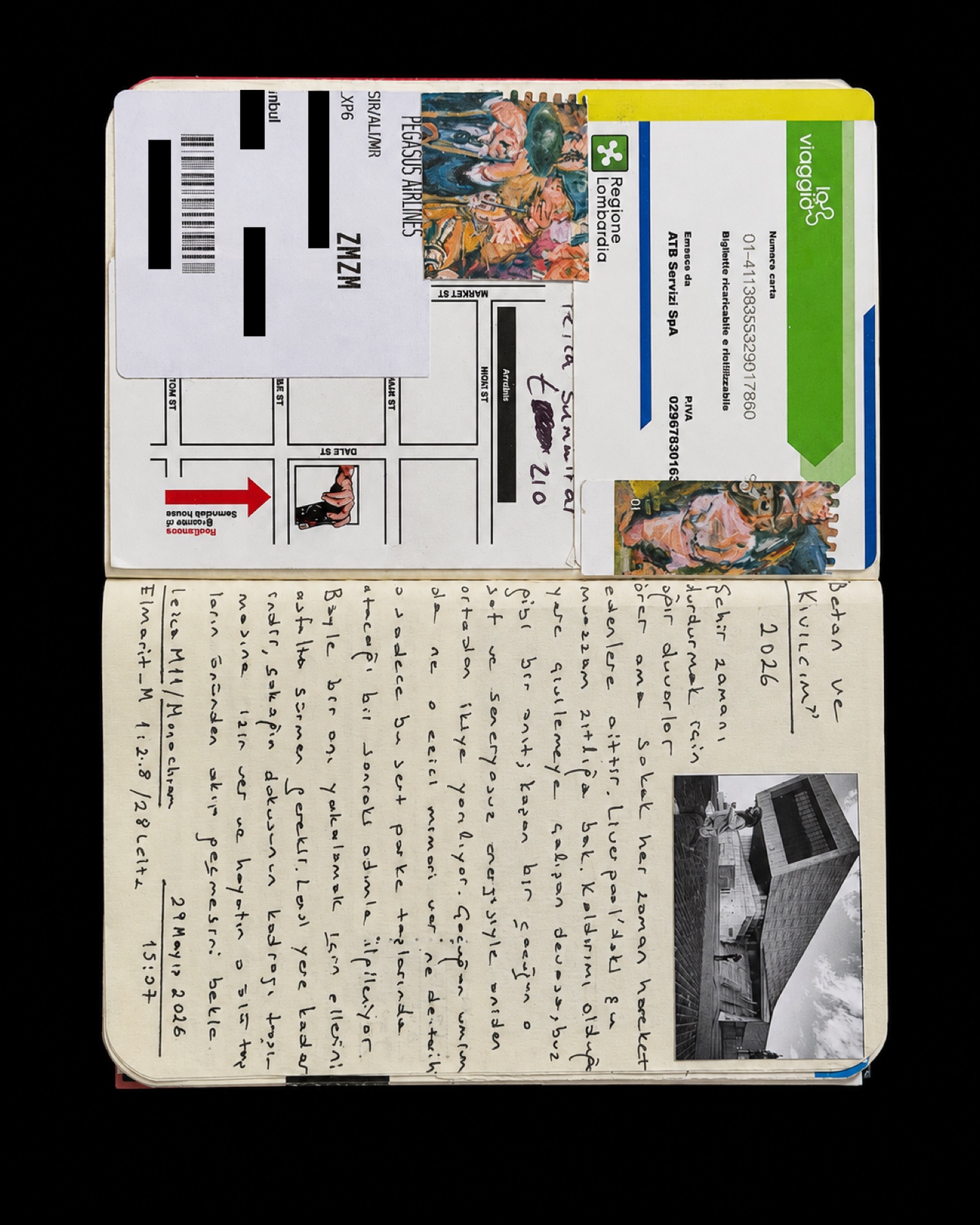
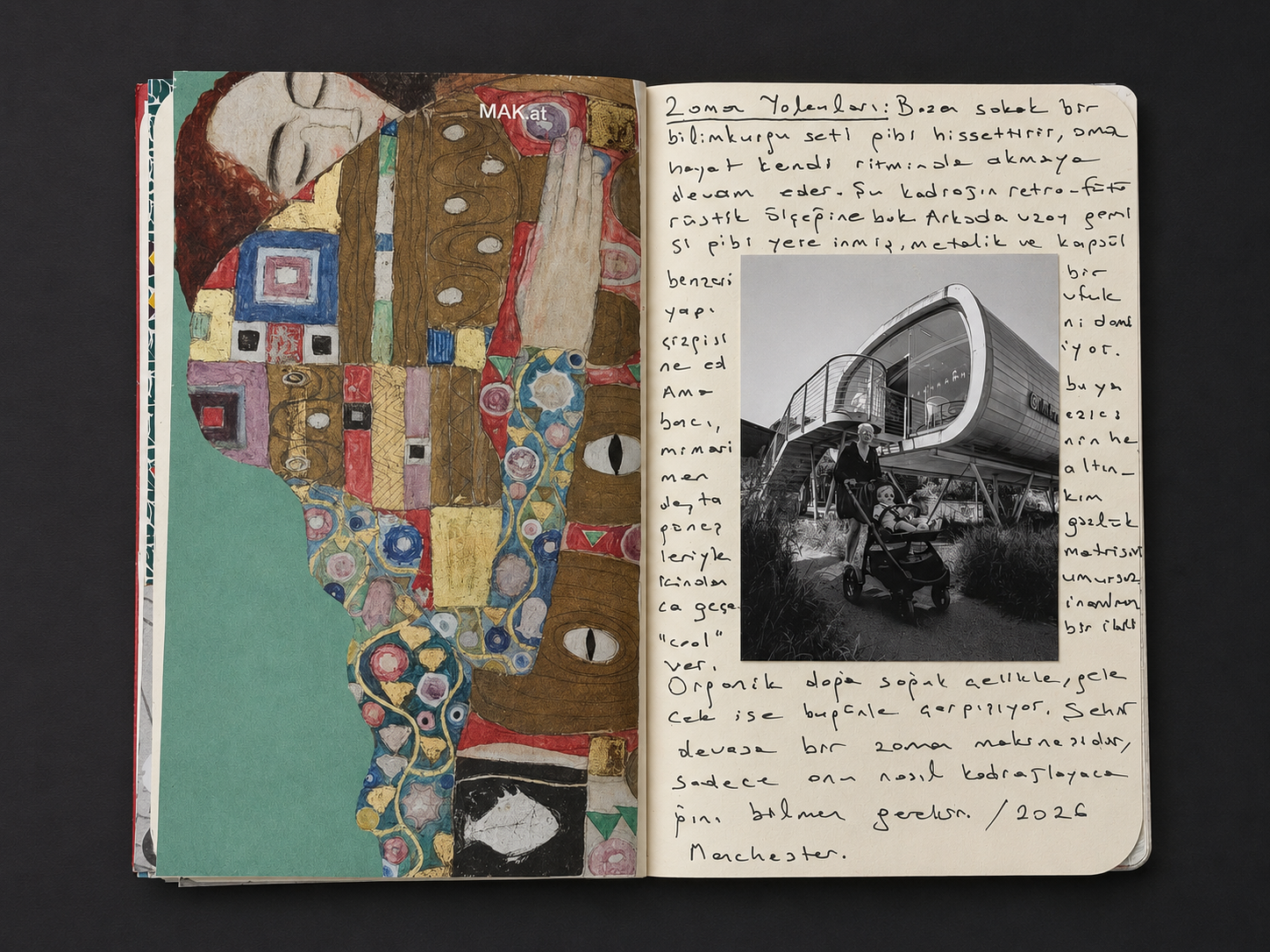
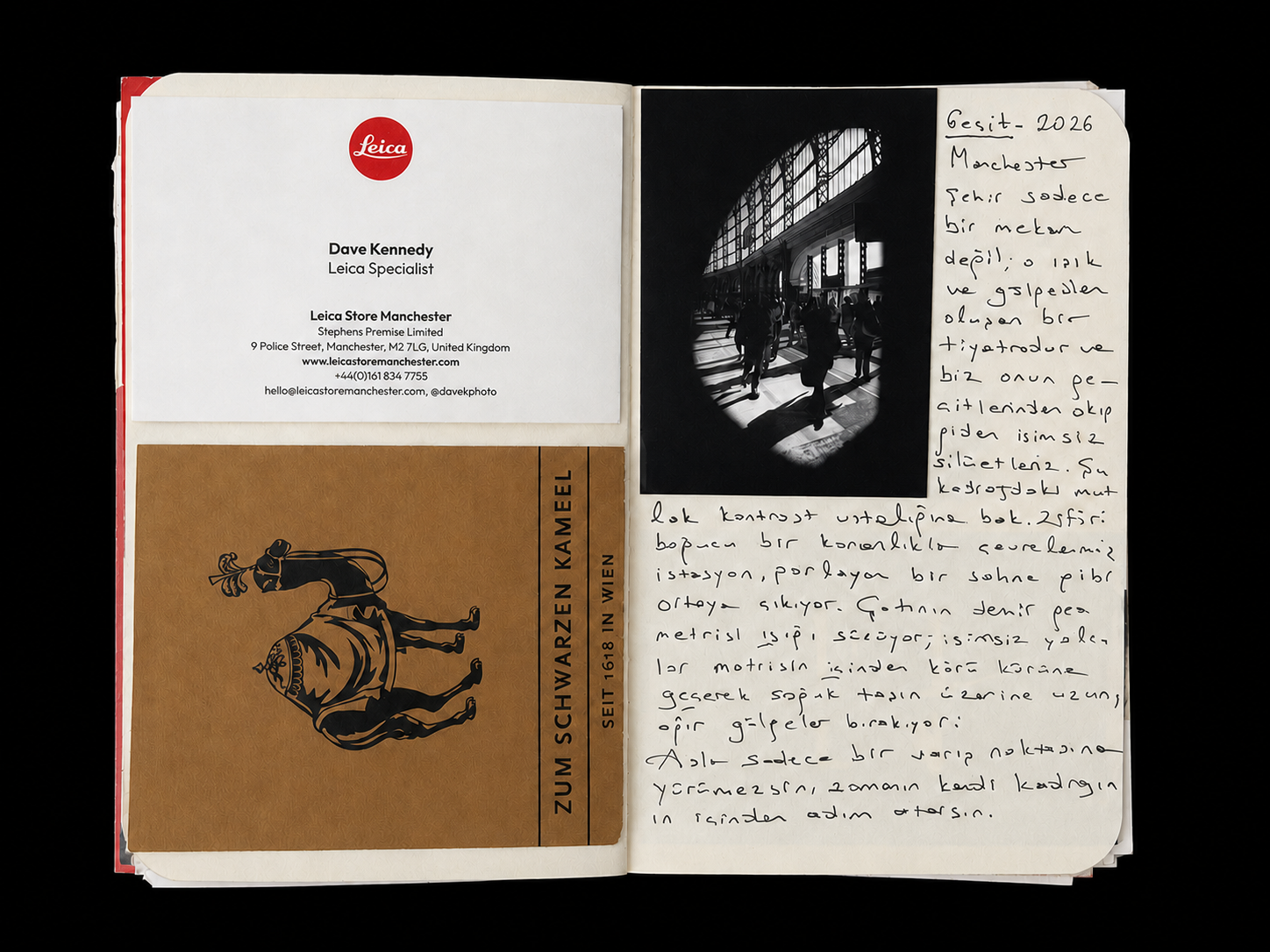
The city is a theatre made of light and shadow.
It is not merely a place. Photography keeps the nameless silhouettes that slip out of the play and leave long, heavy shadows on the cold stone.
The city writes on skin, glass and memory.
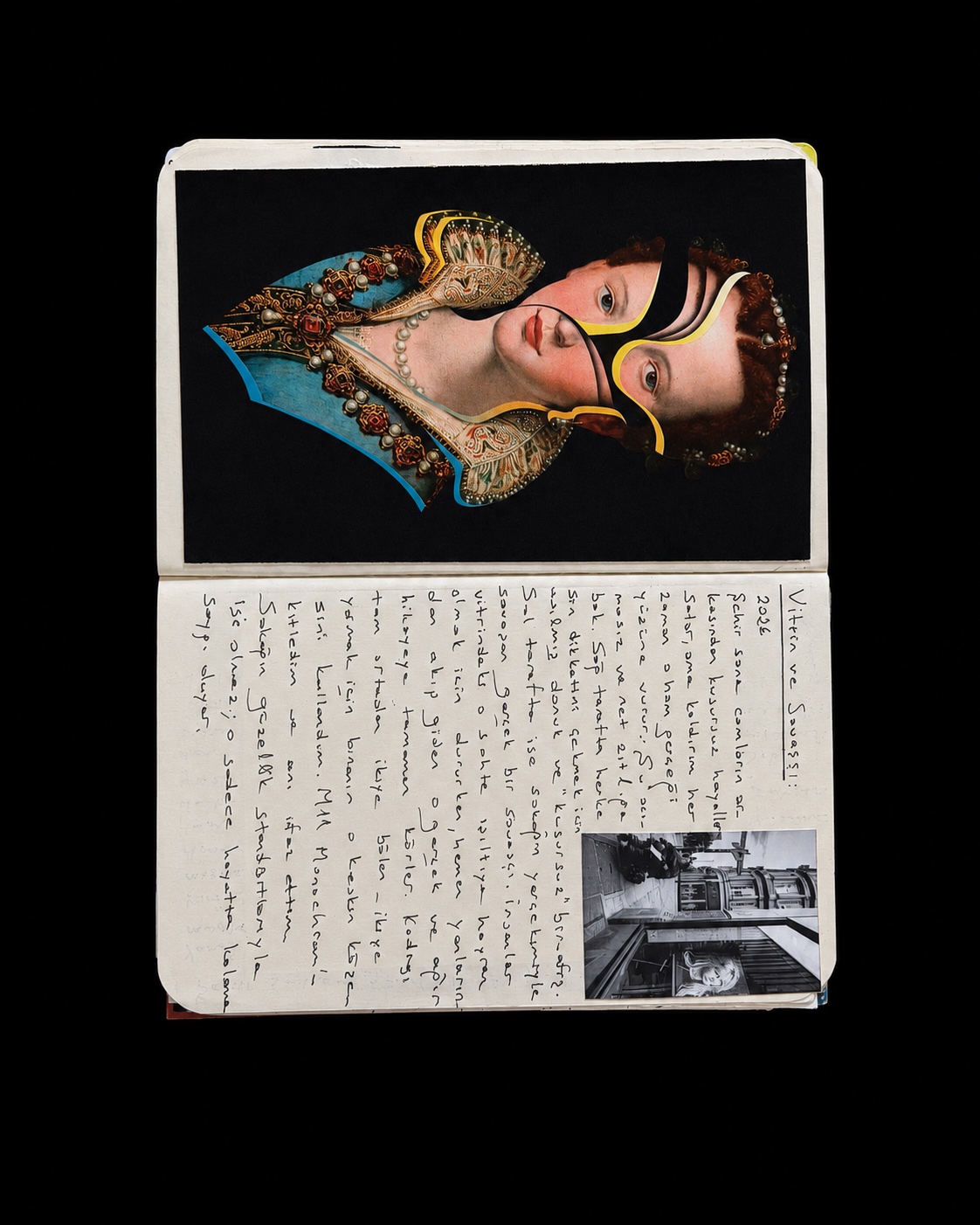
I do not look for Manchester only in its buildings. Sometimes the city appears on a body, on a tattoo, on a temporary surface that carries its name like a wound or a flag.
The city is an enormous time machine.
While deciding how to frame it, I try to remember that the photographer cannot know what the future will miss. An ordinary surface may become evidence.
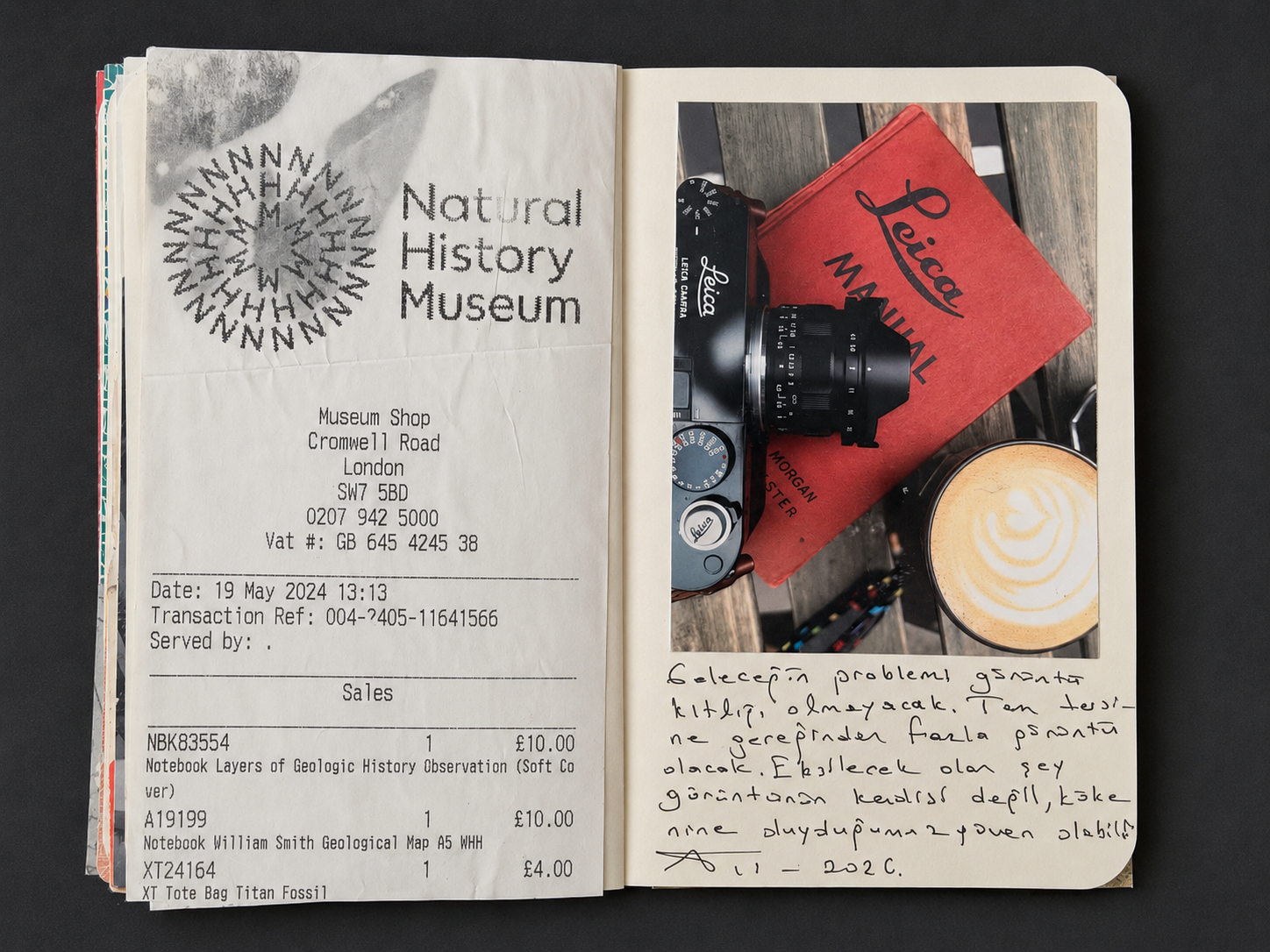
What was this image’s relation to the world?
The future will not suffer from too few images, but from too many. What may disappear is not the image itself, but our trust in its origin and in what it touched.